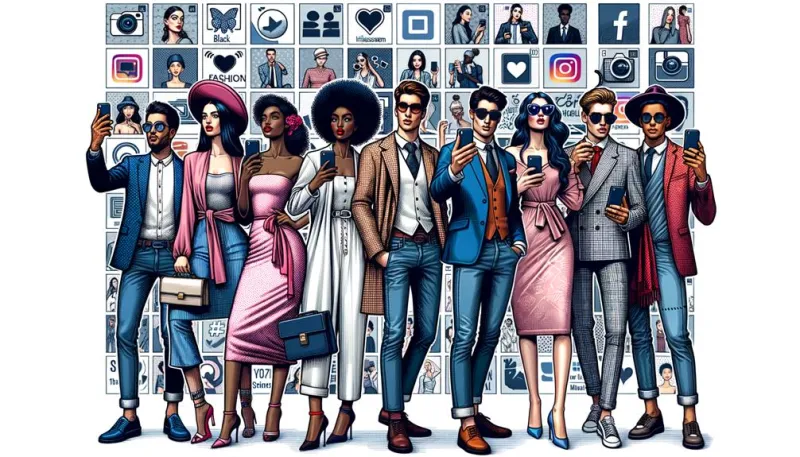
Hiding in Plain Sight: The Creators Who Deliberately Stay Off the Algorithm's Radar

Photo: San Diego Air & Space Museum Archives, Public domain, via Wikimedia Commons
There's a corner of the internet where success looks a lot like failure — at least on paper. Low view counts. Modest subscriber numbers. The kind of engagement metrics that would make a brand manager sweat through their Patagonia vest. But spend five minutes talking to the people building inside these spaces and you start to realize something uncomfortable: they're not struggling. They're hiding. On purpose.
This is the new attention economy, and the people winning it aren't the ones chasing virality. They're the ones who've figured out exactly how to avoid it.
The Algorithm Trap Nobody Talks About
Most creator advice runs on a single assumption — more reach equals more power. Get the views, grow the audience, land the brand deal. It's a pipeline so well-worn it's basically mythology at this point. But here's the thing about getting picked up by a major algorithm: it's a double-edged deal. Sudden visibility floods your comment section with people who don't get the references, dilutes the community vibe you spent years cultivating, and — maybe worst of all — signals to platforms that you're ready to be monetized for them, not for yourself.
A growing number of micro-influencers have clocked this. And they're doing something that looks almost counterintuitive from the outside: they're engineering their own invisibility.
Call it attention arbitrage. While everyone else is optimizing for the widest possible funnel, these creators are deliberately narrowing theirs — using specific language, inside references, posting cadences, and even visual aesthetics designed to repel casual scrollers while acting like a dog whistle for exactly the people they want.
The Mechanics of Staying Small
So what does deliberate obscurity actually look like in practice? It's subtler than you'd think.
Some creators use what you might call "friction content" — videos or posts that require prior knowledge to fully appreciate. A cooking account that assumes you already know what mise en place means without explaining it. A music commentary channel that drops deep-cut references to regional scenes most people have never heard of. A fitness creator whose entire aesthetic is built around a hyper-specific training philosophy that takes weeks to even understand.
The friction isn't accidental. It's a filter.
Others play with posting time and format in ways specifically designed to underperform on discovery feeds. Short enough to avoid the long-form content push. Niche enough to dodge trending topic boosts. Sometimes even deliberately under-tagged, keeping the content searchable for the right people while staying off the radar of algorithmic recommendation engines that would otherwise amplify it to the wrong ones.
Then there's the language layer — a kind of coded vocabulary that regular community members pick up over time. It creates a natural in-group boundary without ever explicitly saying "you're not welcome here."
Why Parasocial Loyalty Hits Different at Small Scale
Here's what the mainstream creator playbook gets wrong: parasocial connection doesn't scale proportionally. A creator with 800,000 followers doesn't have eight times the audience loyalty of someone with 100,000. In most cases, they have significantly less — spread thin across people who followed because something went viral once and never really connected with the core content.
Micro-audiences, by contrast, tend to be self-selected to an almost eerie degree. These are people who found the content through three degrees of recommendation, stuck around because it felt like it was made specifically for them, and now show up with the kind of consistency that brands would kill for but rarely understand how to cultivate.
The business math here is actually pretty wild once you work it out. A creator with 15,000 deeply engaged followers can often generate more revenue per post — through direct memberships, niche product partnerships, or community subscriptions — than someone sitting on half a million passive ones. The audience is smaller. The attention is denser. And crucially, it's theirs in a way that algorithm-dependent audiences simply aren't.
The Cultural Origination Problem
There's a bigger story here that goes beyond individual creator strategy, though. These micro-communities aren't just building sustainable business models — they're functioning as cultural laboratories that the mainstream eventually strip-mines.
Almost every major aesthetic trend of the last five years started in a space exactly like this. A Discord server. A subreddit with 4,000 members. A Tumblr successor that nobody's heard of. A niche YouTube channel with a devoted but numerically modest following. The ideas germinate there, develop their own internal logic, build a vocabulary and a visual language — and then, eventually, get picked up, sanded down, and resold to a mass audience that has no idea where any of it came from.
The irony is that the creators who deliberately stay small are, in many ways, the actual engine of cultural production. They just rarely get credit for it. By the time the aesthetic hits a Target ad or a Netflix thumbnail, it's been abstracted beyond recognition. The originators either stayed obscure by choice, or got absorbed into the machine and lost what made them interesting in the first place.
What This Actually Reveals About Where We Are
The fact that "staying small" has become a genuine strategy — not a consolation prize, but a deliberate competitive choice — says something real about where the attention economy has landed in 2025.
People are tired. Tired of content that feels engineered for reach rather than resonance. Tired of creators who clearly pivoted the moment the algorithm shifted. Tired of communities that feel like an audience rather than a room full of people who actually get it.
The micro-influencers gaming their own obscurity aren't doing it out of some romantic commitment to authenticity for its own sake. They're doing it because they figured out, often through hard experience, that authentic community is the only thing the algorithm genuinely can't replicate or commodify — as long as you don't hand it over.
The edge of digital culture has always been where the real stuff lives. RevedGo has been saying that since day one. What's new is that the people on that edge are starting to understand their own leverage — and they're choosing to stay there.
Not because they can't break through. Because breaking through would cost them everything that makes the whole thing worth doing.