No Face, No Problem: Why Faceless Online Spaces Are Where the Real You Shows Up
Photo: Unknown, CC0, via Wikimedia Commons
There's a specific kind of freedom that kicks in the moment you stop performing.
You know the feeling — not the curated Instagram post, not the LinkedIn update dressed up in professional-speak, not the carefully worded tweet you rewrote four times before posting. We're talking about the version of yourself that shows up at 2 a.m. in a Discord server with forty-three members, half of whom you've never seen a photo of, all of whom somehow get it. Whatever "it" is for you.
That's the space RevedGo has always been drawn to — the edges where digital culture gets weird, honest, and genuinely interesting. And right now, those edges are defined by one increasingly powerful concept: anonymity.
The Persona Fatigue Is Real
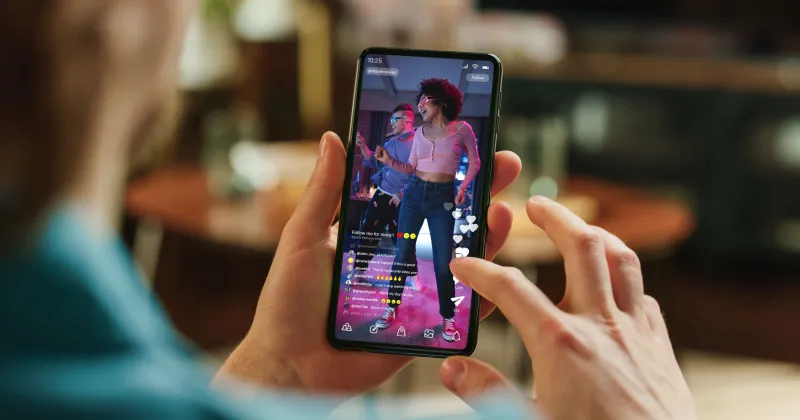
Mainstream social media has a branding problem. Not in the marketing sense — in the human sense. Platforms like Instagram, TikTok, and X (still Twitter in our hearts) have quietly trained users to think of themselves as products. Every post is a pitch. Every photo is a positioning statement. You're not sharing your life; you're managing your narrative.
Psychologists have started calling this "persona fatigue" — the exhaustion that comes from maintaining a digitally coherent self across multiple platforms, all with slightly different audiences, norms, and expectations. It's tiring in a way that's hard to explain to someone who hasn't felt it, but deeply familiar to anyone who has.
So people are opting out. Not off the internet entirely — but out of the performance. They're migrating toward spaces where the mask isn't just optional; it's the whole point.
The Lab Underneath the Internet
Pseudonymous forums, niche image boards, and invite-only Discord servers have quietly become some of the most creatively fertile places online. Think about where memes actually originate before they go mainstream. Think about where obscure music genres get named, debated, and dissected before Pitchfork catches wind of them. Think about where the language of internet culture — the phrases, the aesthetics, the in-jokes — gets workshopped before it filters up to the surface web.
It's not Reddit's front page. It's not Twitter's trending tab. It's somewhere smaller, weirder, and largely invisible to anyone who hasn't been pointed there by someone who knows.
These spaces function like creative laboratories precisely because they're low-stakes. When nobody knows who you are, you can try things. You can float a half-formed idea without worrying it'll be screenshot and mocked. You can be into something before it's cool — or be into something that will never be cool — without it reflecting on your personal brand. There is no personal brand. That's the whole point.
Anonymity as Authenticity — Seriously
Here's the counterintuitive part, and it's worth sitting with: anonymous spaces often produce more authentic self-expression than platforms built around real identity.
Facebook — which famously pushed "real names only" as a trust mechanism — turned out to be a breeding ground for performative outrage, family drama, and highly curated life updates. Meanwhile, boards and servers where nobody uses their legal name regularly host some of the most vulnerable, honest, and creatively unfiltered conversations happening anywhere online.
When there's no reputation to protect, people talk differently. They admit uncertainty. They share things they find genuinely funny rather than things they think will land. They explore ideas that don't fit neatly into their public-facing identity. The absence of accountability, which sounds like it should produce chaos, often produces something closer to candor.
This isn't to romanticize anonymous spaces — they can and do produce toxicity, harassment, and worse. That's real, and it matters. But it's not the whole story, and it's increasingly not even the dominant story in the more intentionally cultivated corners of the anonymous web.
The New Identity Architecture
What's interesting is how users in these spaces approach identity construction. It's not that they have no identity — it's that they have a different kind. A username, a posting history, a recognizable voice, a set of aesthetic references. In some communities, a well-established pseudonym carries more cultural weight than a verified real-name account ever could.
This is identity built from behavior rather than biography. You are what you post, how you engage, what you know, what you contribute. There's no profile photo to judge. No hometown to clock. No job title to use as a shortcut. You have to actually show up, and keep showing up, to mean anything.
For a generation that grew up being told to "build their personal brand," this is almost radical. Identity as something earned through participation rather than packaged for consumption.
What Draws People In
Talk to anyone who's found their people in a niche Discord server or a small pseudonymous forum, and you'll hear a version of the same story: they stumbled in, didn't expect much, and then couldn't leave. The specificity is magnetic. Whether it's a server dedicated to a single obscure music subgenre, a forum for people obsessed with a particular corner of design history, or a board that exists purely to riff on a very specific type of absurdist humor — the depth is the draw.
Mainstream platforms optimize for breadth. These spaces optimize for depth. And for a lot of people, especially those who've felt like their actual interests were too niche, too weird, or too specific to ever find community around, depth is everything.
The Signal in the Noise
RevedGo exists in this same general territory — a space that doesn't announce itself too loudly, that rewards the people who find it and dig in. There's something about operating at the edges of mainstream digital culture that makes things feel more honest, more interesting, and more alive.
Anonymity isn't a bug in these spaces. It's a feature — maybe the defining feature. It creates the conditions for a different kind of creativity, a different kind of community, and a different kind of self.
And in a digital landscape increasingly dominated by algorithmic performance pressure and relentless personal branding, that difference is starting to look less like a quirk and more like a lifeline.