Proudly Plastic: Why the Fakest Creators Online Are the Most Honest Ones Right Now
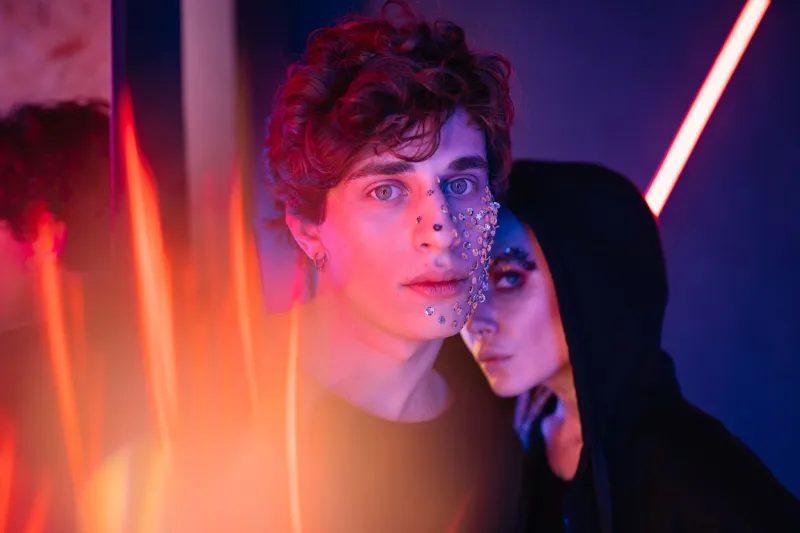
There's a creator on TikTok — no name attached, no face on camera — who posts videos of herself doing mundane things while narrating them in an obvious, overly rehearsed cadence, like she's reading from a script she wrote for a character who is definitely not her. The lighting is too perfect. The reactions are half a beat late. Every "spontaneous" moment has the unmistakable texture of something staged. And her comment section? Absolutely flooded with people saying this is the most real thing I've seen in months.
That's not a contradiction. That's the new logic.
The Exhaustion That Started This
For years, the internet's dominant cultural currency was authenticity. Raw footage. Messy rooms. Unfiltered opinions. The closer something felt to an accidental recording of real life, the more it was rewarded — by algorithms, by followers, by brands desperate to seem relatable. The whole machine ran on the premise that "real" was the goal.
But here's what happens when realness becomes a performance metric: it stops being real. By the mid-2020s, "authentic content" had become its own highly produced genre, complete with aesthetic conventions, structural formulas, and a recognizable visual language that was anything but spontaneous. The messy room was styled. The emotional breakdown was lit from the left. The "I wasn't going to post this" post had been uploaded at peak engagement hours.
People noticed. Younger audiences especially — Gen Z and the tail end of millennials who basically grew up watching the authenticity playbook get written and then immediately commodified — started to feel the whole thing as a kind of low-grade manipulation. Not malicious, necessarily. Just exhausting. Like being sold sincerity on a subscription model.
Enter the Deliberately Fake
What emerged from that fatigue isn't cynicism, exactly. It's something stranger and more interesting: a posture of admitted construction. Creators who openly, almost theatrically, signal that what you're watching is a performance. Not in the way that actors perform, where the goal is immersion — but in a way that keeps the seams visible on purpose, like leaving the scaffolding up after the building is done.
Call it synthetic authenticity. The name sounds like an oxymoron, and it kind of is, which is precisely the point.
The move looks different depending on where you encounter it. On YouTube, it shows up as hyper-produced videos that openly mock their own production value mid-sentence. On Instagram, it's curated aesthetics so aggressively curated they tip into parody — but a parody that isn't quite joking. On Tumblr-adjacent corners of the web and in Discord communities that don't really want to be found, it manifests as personas so elaborate and internally consistent that they function less like identities and more like characters someone decided to inhabit permanently.
The message underneath all of it is something like: I know this is constructed. You know this is constructed. We're both here anyway. Doesn't that feel better?
Why It Reads as Rebellion
The transgressive quality of this is easy to miss if you're not paying attention to what it's pushing against. In a media environment where authenticity has been weaponized — used by brands, by influencers, by political figures, by wellness culture — to manufacture trust, openly admitting you're performing is a kind of refusal. It opts out of the game by making the game visible.
There's a long tradition of this in art, actually. Bertolt Brecht spent a career trying to keep theater audiences from getting too comfortable, deliberately breaking the fourth wall so they'd think instead of just feel. Punk wore its own artifice on its sleeve — the ripped clothes, the deliberately ugly fonts — as a middle finger to the polish of mainstream culture. What's happening online now isn't identical to either of those things, but it's operating in the same neighborhood.
The difference is scale and speed. When a synthetic-authenticity creator hits, the idea spreads across platforms in days, gets absorbed, gets referenced, gets slightly misunderstood, and eventually lands in a form that's three or four mutations away from the original. By the time a brand tries to replicate it, it already looks dated to anyone who was there at the start.
The Weird Intimacy of Watching Someone Perform
Here's the part that doesn't quite make logical sense but makes complete emotional sense: audiences report feeling closer to creators who openly perform than to ones who claim to be unfiltered. Something about the admission of construction lowers the stakes. You're not being asked to believe in a person's realness. You're being invited into a shared understanding that this is a thing someone made, and you can appreciate it as a made thing.
It's the difference between a magician who pretends the trick is real and one who says, watch how I do this — and somehow the second one is more impressive, more intimate, more worth your time.
That dynamic is reshaping what parasocial connection looks like. The old model asked you to feel like you knew someone. The new model asks you to appreciate someone's craft, their commitment to a bit, their willingness to build something artificial and stand in it without apology.
What Happens When the Mainstream Catches Up
The inevitable question is whether synthetic authenticity survives contact with mass adoption. Every genuinely transgressive online posture eventually gets flattened into content strategy — the authenticity aesthetic itself being the most obvious recent example.
The optimistic read is that this one is harder to co-opt, because the whole premise depends on the audience being in on it. The moment a brand tries to deploy deliberate artificiality as a trust-building mechanism, the artificiality stops being a statement and starts being a tactic, which is exactly what the aesthetic was invented to resist. It might be self-protecting in a way that earlier authenticity movements weren't.
The pessimistic read is that it doesn't matter, that everything gets absorbed eventually, and that the people who built this thing will have already moved somewhere else by the time it's showing up in Super Bowl ads.
Both are probably true. That's kind of how this works.
The Signal Underneath the Noise
What synthetic authenticity is really pointing at is a generational recalibration of what honesty means online. For a while, honesty meant showing the unedited version. Now, for a significant and growing slice of internet culture, honesty means showing the edit — making the construction legible, refusing to pretend that what you're doing isn't a thing you're doing.
It's a weird place to land, philosophically. But it makes a certain kind of sense in a media environment where the tools for manufacturing realness have gotten so good that realness itself has become the least trustworthy signal available.
When everything can look genuine, the most honest thing you can do might be to look fake on purpose.