The Glitch That Went Viral: 8 TikTok Trends Nobody Saw Coming and What They Actually Reveal About the Algorithm
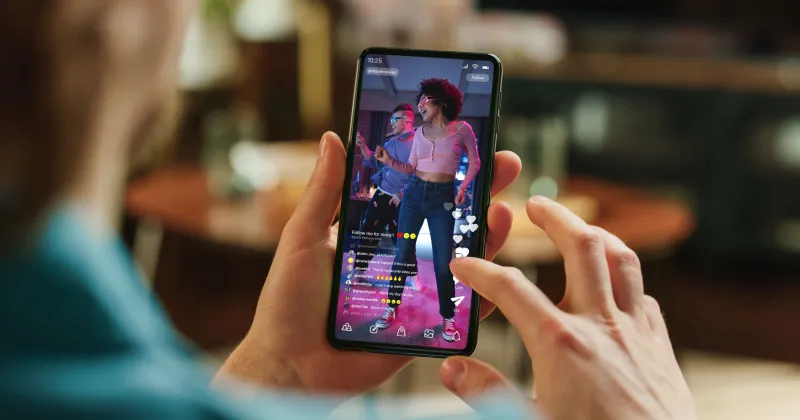
Photo: person scrolling TikTok phone screen colorful trending videos, via www.searchenginejournal.com
Every social media manager with a TikTok strategy deck thinks they understand the algorithm. Most of them are wrong — and the algorithm keeps proving it.
TikTok's For You Page is genuinely one of the most sophisticated content recommendation systems ever built. It's also, delightfully, completely capable of losing its mind and sending a seventeen-second video of someone reorganizing their fridge to forty million people. The gap between those two things — the precision and the chaos — is where the most interesting stuff happens.
We dug into eight trends that defied every prediction model, talked to creators who accidentally landed in the middle of them, and tried to figure out what separates a genuine algorithmic fluke from something that was quietly engineered to look like one.
1. The Sleepy Soup Sound
In early 2023, a sound clip of someone softly narrating a soup recipe in a half-asleep monotone started appearing under completely unrelated videos. Meditation content. Gym clips. Videos of people's cats. The sound had originated from a small creator with under 2,000 followers. Within ten days, it had been used in over 400,000 videos.
What happened? TikTok's audio clustering algorithm — which groups content by sound and surfaces it to users who've engaged with similar audio — latched onto the clip's unusually high completion rate. People were listening all the way through. Not because the soup was interesting, but because the voice was oddly soothing. The algorithm didn't know the difference. It just saw retention numbers and hit the gas.
Creator insight: "I didn't even post it as a cooking video," the original creator told us. "I was just tired and rambling. I still don't fully understand what happened."
2. The Wrong Caption Trend
Somewhere in mid-2022, creators started deliberately captioning their videos with text that had nothing to do with the content. A video of someone skateboarding captioned "how to make sourdough." A cooking tutorial captioned "my car broke down." The disconnect was the joke — but it was also, accidentally, an SEO exploit. TikTok's caption indexing started surfacing these videos to people searching for the captioned topic, creating a feedback loop of confused but entertained viewers.
The trend burned fast and hot before the platform adjusted its indexing. But for about three weeks, it was everywhere.
3. The 4 a.m. Subculture
This one is less a single trend and more a recurring phenomenon. Periodically, TikTok's algorithm seems to favor content posted in the 3–5 a.m. window — not because the algorithm cares about the time, but because the audience available at 4 a.m. is a specific type of insomniac who watches videos all the way through and engages heavily. High engagement from a small but intensely active audience signals quality to the algorithm, which then amplifies the content to broader audiences the next morning.
Several creators have reverse-engineered this and now deliberately post late-night content. It works often enough to be a genuine micro-strategy.
4. The Accidental ASMR Economy
A video of someone pressure-washing a particularly grimy driveway went viral not because of the visuals — though those were satisfying — but because of the sound. The audio was accidentally perfect ASMR. TikTok's algorithm, tracking watch time and replay rate (people were rewatching for the sound), pushed it aggressively into feeds.
Within weeks, an entire micro-genre of "accidental ASMR" content had emerged: people posting videos of ordinary tasks that happened to produce satisfying audio. Power tools. Rain on windows. Keyboard typing. None of it was intentionally ASMR. Most of it outperformed dedicated ASMR content.
5. The Misheard Lyric Explosion
A well-known song — we won't name it to avoid the licensing headache — started circulating with a widely misheard lyric. Someone made a video pointing out the mishearing. Then someone made a video defending the original lyric. Then a third creator made a video that was ostensibly about the debate but was actually just using it as an excuse to lip-sync to the song in a funny way.
TikTok's "conversation clustering" — its tendency to group response videos and duets — turned a minor audio observation into a multi-week content ecosystem. Brands tried to jump in. Most failed. The ones that succeeded did so by genuinely engaging with the joke rather than trying to own it.
6. The Regional Food Discovery Pipeline
Somebody in rural Louisiana posted a video of a hyper-regional dish that most of the country had never heard of. It wasn't filmed well. The creator wasn't trying to go viral. But TikTok's food content cluster — one of the most active on the platform — picked it up, and within 72 hours, people across the country were searching for the dish, recreating it, and debating its origins.
This has happened repeatedly with regional American food: dishes that were completely unknown outside their home geography getting catapulted into national conversation by a single well-timed TikTok. The algorithm doesn't know geography. It knows engagement. And novelty drives engagement.
7. The Comment Section That Became the Content
A fairly unremarkable video accumulated a comment that was funnier than the video itself. People started screenshotting the comment. Then creators started making videos about the comment. Then someone made a video responding to the videos about the comment. TikTok's duet and stitch mechanics turned a single funny observation into a layered content conversation that lasted weeks and involved creators who'd never interacted before.
This is one of the algorithm's stranger features: it can accidentally create collaborative storytelling structures that nobody planned.
8. The Niche Community Leak
A micro-community — we're talking a few thousand dedicated users deep into a very specific hobby — started using a particular hashtag internally. The hashtag was obscure enough that the algorithm hadn't indexed it heavily. Then one video using that hashtag got unusual engagement from outside the community. The algorithm, seeing the engagement spike, started surfacing the hashtag to a broader audience.
The niche community's content — which was genuinely good, just deeply specific — suddenly had a mainstream audience. Some creators loved it. Others felt like their private space had been cracked open. The tension between those two reactions became its own content cycle.
So What's Actually Going On?
Here's the honest answer: TikTok's algorithm is optimizing for engagement signals it can measure — watch time, replays, shares, comments, follows — without any understanding of why those signals are happening. That gap between measurement and meaning is where trends are born.
The creators who consistently go viral aren't necessarily gaming the algorithm. They're creating content that generates genuine engagement — and then the algorithm does the rest. The ones who try to purely engineer virality often miss, because they're optimizing for the signal without creating the underlying thing that produces it.
"You can study the algorithm all you want," one mid-size creator told us. "But at the end of the day, if the video isn't actually interesting to a real human being, it's not going anywhere."
The glitches, the flukes, the unexpected explosions — they all trace back to the same thing. Real people reacting honestly to something that caught them off guard. The algorithm just figures out how to find more of those people.
And sometimes, in the process, it finds all of them.