Planted: The New Art of Leaking Yourself Before Anyone Else Can
Somewhere between a PR stunt and a psychological experiment, a new kind of content is quietly flooding your feeds. It looks rough. It looks unplanned. It looks like something you were never supposed to see. And that's exactly the point.
Call it the reverse leak — a calculated move where artists, musicians, influencers, and even mid-tier content creators deliberately plant fabricated behind-the-scenes footage, fake early drafts, staged personal moments, and manufactured candid clips into the digital ecosystem before anyone can beat them to it. The goal isn't just hype. It's control.
The Setup
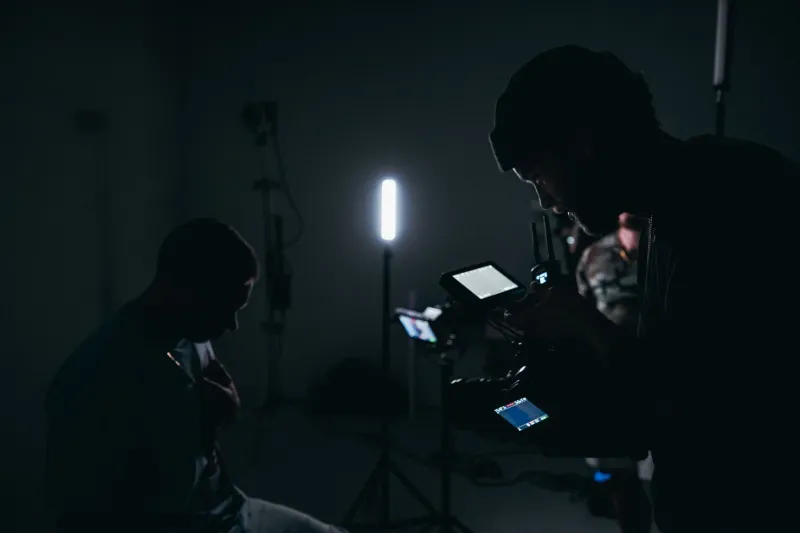
Here's how it usually works. A creator is sitting on a project — a new album, a brand deal, a direction shift, a collab that might read wrong to certain corners of the internet. Instead of waiting for a journalist or a disgruntled former collaborator to frame the story, they seed their own version first. A shaky vertical video of a "studio session" gets quietly posted to a private account that's not-so-private. A voice note "accidentally" ends up in someone's story. A blurry photo of handwritten lyrics surfaces on a fan forum with zero context.
By the time the official release drops, the narrative is already half-written — and the creator wrote it.
This isn't entirely new. Musicians have been staging leaks since the early days of file-sharing culture. But what's changed is the sophistication, the intentionality, and the sheer volume of it happening right now across every corner of the content economy.
Why Now?
The short answer is that parasocial culture broke the old PR playbook.
Audiences in 2024 don't trust polished. They don't trust press releases or carefully staged photoshoots or interviews where every answer sounds rehearsed. What they trust — or at least, what they feel like they trust — is access. The blooper. The breakdown. The 3 a.m. voice memo. The unedited take.
Creators figured this out fast. And once you understand that "raw" is the new "curated," manufacturing rawness becomes just another production task.
There's also a more defensive logic at play. The internet is brutal and fast, and the window between a rumor and a reputation crisis has collapsed to almost nothing. Planting your own narrative before a real leak — or before a bad-faith interpretation takes hold — is essentially triage. You're not lying, exactly. You're just making sure your version of the truth arrives first.
The Psychology of Manufactured Access
What makes the reverse leak so effective is that it exploits a very specific psychological hunger: the desire to feel chosen.
When you stumble across something that feels like it wasn't meant for you, your brain assigns it a different kind of credibility. You found it. You weren't sold it. That distinction matters enormously in how you process and trust the content — even if the "stumbling" was engineered down to the pixel.
Researchers studying parasocial relationships have noted for years that perceived intimacy is more powerful than actual intimacy when it comes to shaping fan loyalty. You don't need to actually know someone to feel like you do. You just need a few well-placed moments that feel unguarded. Fabricated behind-the-scenes content is essentially a delivery mechanism for that feeling — a synthetic injection of closeness.
The creators who do this well aren't just content strategists. They're amateur behavioral engineers, whether they'd call themselves that or not.
What It Looks Like in the Wild
You've probably consumed this content without realizing it. The voice note that "leaked" from a famous musician's iCloud that turned out to be a pre-release single. The grainy clip of a comedian doing a set at a bar that "nobody filmed" but somehow made it to Reddit. The screenshot of a creator's notes app, full of half-formed thoughts that perfectly aligned with the persona they were building at the time.
Some of these are genuine accidents. A lot of them aren't.
The tell — if you're paying attention — is usually in the timing. Reverse leaks tend to surface at very specific moments: right before an announcement, right after a controversy, right when a creator's public image needs a reset. Accidents don't respect the content calendar. Strategic plants do.
There's also a texture to fabricated candor that's slightly off once you've trained your eye. The lighting is bad in a very deliberate way. The emotional moment is legible from across a room. The "unfinished" song sounds suspiciously well-mixed. Authentic messiness is actually pretty hard to fake convincingly, which is why the best reverse leaks tend to be built around real moments that are then reframed, recontextualized, or timed with surgical precision.
The Line Nobody Can Quite Find
Here's where it gets genuinely complicated: is any of this actually wrong?
Creators have always managed their image. Publicists exist. Talking points exist. Every interview, every appearance, every social post is a version of narrative control. The reverse leak is just a newer, sneakier tool in a very old kit.
But there's something different about content that's designed to feel like it bypassed the filter entirely. When you believe you're seeing the unmediated version of someone and you're not, the manipulation runs deeper than a press release ever could. It's not just shaping perception — it's exploiting the specific trust that comes from feeling like you got behind the curtain.
Fans who discover that a "candid" moment was staged often describe the feeling less like disappointment and more like a particular kind of betrayal. Not because they were lied to in a technical sense, but because the lie was dressed up as intimacy.
Where This Goes
The reverse leak is only going to get more sophisticated. As AI-generated content gets harder to detect, the fabrication toolkit expands dramatically. We're already in a moment where a convincing "early demo" or a fake voice note is within reach of almost anyone with a laptop and a few hours. The question of what's real behind the scenes — for any creator, at any level — is going to get genuinely murky in ways that make today's staged leaks look quaint.
What's worth watching isn't just the individual instances. It's what the practice reveals about the deal audiences and creators have quietly made with each other. We said we wanted unfiltered. They gave us the simulation of it. And for a while, at least, that was close enough.
The edge of digital culture has always been where the performance and the real thing get hardest to separate. The reverse leak isn't an anomaly. It might be the most honest signal yet about where we actually are.